That sharp, familiar pinch in your shoulder when you roll out of bed—it’s the tell-tale sign your mattress support isn’t doing its job. For side sleepers, the shoulder and hip are the pressure points that bear the load, and if the core beneath you can’t give way there, you’ll feel it every morning. A too-firm mattress won’t contour, leaving your shoulder jammed against a rigid surface. A too-soft one sinks too deep, letting your spine sag out of line. It’s a delicate balance, and the wrong choice leaves you sore before you’ve even had your kopi.
The key is a support core that’s engineered to yield at those specific spots without collapsing everywhere else. Think of it like a foundation that’s firm at the centre but has built-in relief zones. A medium-firm innerspring with a softer comfort layer can work, but the zoning has to be precise. Many standard cores are uniform—they’ll support your lumbar fine, but your shoulder gets no special treatment. That’s why the focus should shift to cores designed with pressure mapping in mind, ones that acknowledge a side sleeper’s body isn’t evenly weighted.
Latex or high-density foam cores often get the nod here because they offer a responsive, contouring support. They push back enough to keep your spine aligned, but they’ll cradle the shoulder just a bit deeper. The trick is the transition from that softer shoulder zone back to firmer support for your torso—if it’s too abrupt, you’ll feel a ridge, and your alignment goes off. A well-designed core manages this gradient seamlessly, so you don’t end up with a kink in your neck by dawn.
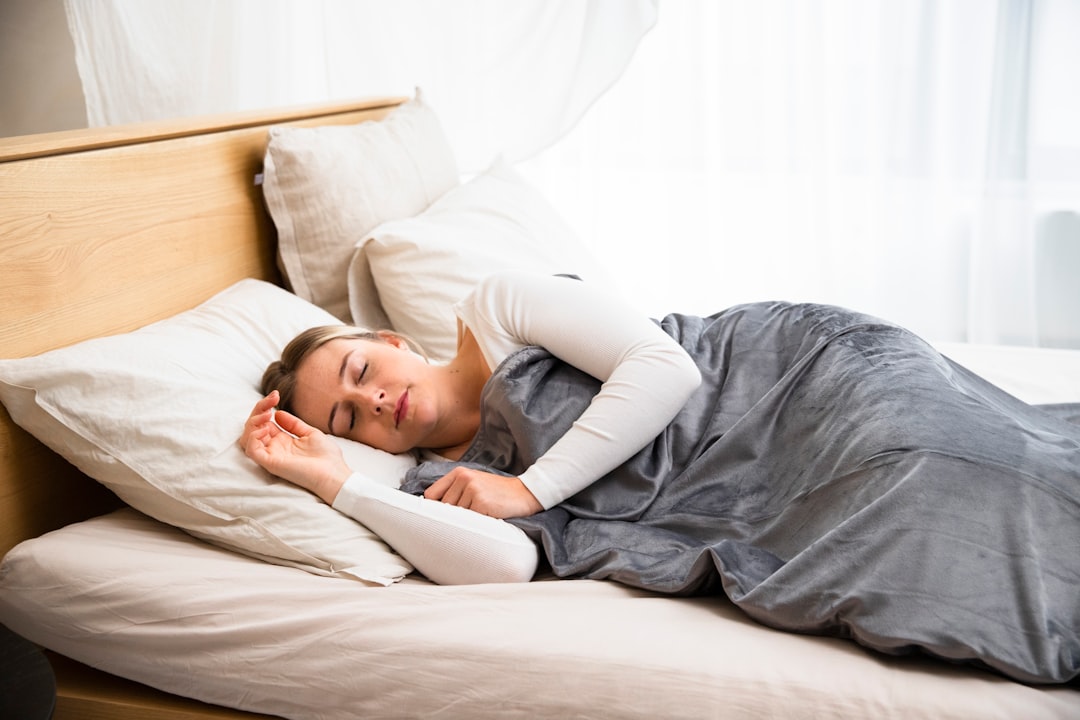
There’s one exception, though: if you’re a very light side sleeper, you might not need that specialised zoning. A lighter frame exerts less pressure, so a good, uniform medium-firm core could suffice without causing that morning ache. If you're torn between constructions, the memory foam versus hybrid guide weighs them for the local climate — memory foam cradles the shoulders and hips with the deepest contour, while a hybrid adds a coil base for support and better airflow. For a side sleeper, it comes down to how much contour you want versus how cool you need to sleep. The guide lays out the trade-off plainly, which is exactly the decision a side sleeper is making.. But for most adults—and especially for pregnant women advised to sleep on the left side—that shoulder relief isn’t optional. The single biggest decision for a side sleeper is firmness, so the mattress firmness scale of 1 to 10 is the tool to use — side sleepers generally want the softer-to-medium-firm range, where the surface cushions the shoulder and hip rather than resisting them. Back and stomach sleepers go firmer; side sleepers go softer. Body weight nudges it too, so a heavier side sleeper may want slightly more support. Shopping by a numbered firmness beats trusting a vague "soft" label that means something different on every mattress.. It’s the first thing to fail, and it dictates everything you look for next.
Side sleepers in Singapore face a peculiar bind. You need enough cushioning to let your shoulder sink in without getting jammed, but too much softness means your hips drop and your spine curves—that’s the hammock effect, and it’s a real pain by morning. In a humid climate, a mattress that’s overly plush can also feel like it’s swallowing you after a few hours. The core of the bed is where this battle plays out.
Foam cores, especially memory foam, are the usual go-to for contouring. They cradle your shoulder nicely, relieving that pressure point. But in a 12 sqm room where ventilation might be limited, a pure foam mattress can sometimes feel too enveloping. A side sleeper's mattress in a queen size at 152 by 190cm is the common couple's choice, and side sleeping is where motion isolation earns its keep — a memory foam or pocketed-spring queen means one partner shifting doesn't jolt the other. The width also lets a side sleeper draw their knees up without hanging off the edge. Pair it with a queen frame built to the same dimensions. For most couples where one or both sleep on their side, the queen is the practical size.. Your body heat gets trapped, and the material doesn’t rebound quickly enough—you might find yourself stuck in a slight dip, which over time doesn’t support alignment. Innerspring cores, with their quicker bounce, keep you more on top of the mattress. That’s good for preventing that sag, but the firm pushback can be unforgiving on your shoulder joint. It’s a trade-off between pressure relief and maintaining a neutral spine line.
For most side sleepers, the winning move is a hybrid approach—a softer comfort layer atop a firmer, responsive support core. The classic side-sleeper choice is a memory foam mattress — it conforms to the body's curves, relieving pressure on the hips and shoulders and helping keep the spine aligned. It also isolates motion well, so a restless partner is less disruptive. The one thing to check in the tropics is heat: gel-infused or open-cell foam dissipates body warmth far better than traditional foam. For the contouring, cradled feel side sleepers tend to prefer, memory foam is the first construction to try.. This gives you the initial sink for the shoulder, then a firm foundation underneath to stop the hips from diving too deep. It’s that medium-soft to medium firmness range that works. One counterintuitive point: a thicker, softer top layer doesn’t always mean better pressure relief if the support underneath is too weak. You need the base to be steady.

The exception? If you’re a very lightweight side sleeper, a firmer innerspring might actually work. Your shoulder doesn’t exert as much force, so you might not need as much cushioning to avoid that jammed feeling—the spring’s pushback could be enough to keep everything level. But for the average person, going too firm is a gamble. You’ll know by the third night if your shoulder is protesting.
So prioritise that balanced feel. Test it by lying on your side and paying attention to your hip—does it feel like it’s dropping lower than your shoulder, or is everything in a straight line? That’s the map you need to follow.
In Singapore's relentless humidity, foam density dictates how a mattress core holds its shape. High-density polyfoam, the common support layer, fares reasonably well—its closed-cell structure doesn't absorb moisture like open-cell foams do. Night after night, a dense polyfoam base provides consistent push-back, keeping your hips and shoulders from sinking too far. But in a non-aircon room, even dense foam can feel warmer because it traps less air. Over years, that steady pressure from a side sleeper's body won't degrade the foam quickly, but the heat retention might make you toss and turn.
Memory foam's famous contouring softens under heat and pressure, which is a double-edged sword here. In 80% humidity, your body heat makes the comfort layer more pliable, offering excellent pressure relief for your shoulder. However, that same heat gets trapped within the foam's viscous structure, creating a warm sleeping surface. Without air conditioning, the foam never really cools down overnight, so you might feel sticky. This constant warmth can accelerate the material's breakdown over time, making it feel less responsive after a few years.
Natural latex stands apart because of its inherent breathability. A foam mattress is the value route to side-sleeper comfort — foam contours to the body for pressure relief at a lower price than spring builds, and it's lighter and easier to handle. Judge it on foam density rather than thickness, since density decides how long it holds support. Many foam models now add cooling gel for warmer climates. For a side sleeper who wants contouring comfort without the premium-tier spend, a quality foam is a sensible starting point.. The material's open-cell structure allows air to circulate, which helps dissipate body heat even in a humid room. This means your pressure points get cushioned without the accompanying sauna effect. For a side sleeper in a typical HDB room, that airflow is crucial for staying cool enough to sleep deeply. Latex also resists moisture absorption better than many foams, so its supportive push-back remains consistent season after season.
The core foam's relationship with heat directly impacts how you feel pressure. A material that retains heat, like traditional memory foam, becomes softer and can let your hips sink too far, risking misalignment. Polyfoam, while firmer, still insulates and can make you feel warmer on the surface. In our climate, this extra warmth isn't just about comfort—it changes how the material performs night after night. You might find yourself shifting position more often to cool down, which interrupts the consistent pressure distribution a side sleeper needs.
Humidity and heat are the silent killers of mattress longevity. A core that can't breathe will degrade faster from the constant thermal stress, losing its supportive qualities. Polyfoam might maintain its structure, but the bonded materials can become brittle. Latex, with its natural resilience, typically outlasts both in these conditions. For a buyer investing in a mattress for a non-aircon space, this is the critical calculation—will the support core still be doing its job five years down the road? The answer hinges entirely on how the material handles the damp, heavy air.
At the $800 mark, you’re looking at basic polyfoam cores. That’s the reality for a Queen-size mattress. It’ll do the job, but pressure distribution for side sleepers is minimal—you’ll likely feel your shoulder digging into a flat, uniform surface. It’s a straightforward choice for a tight budget, but don’t expect it to contour around your hips or offer any real zoning. Humidity and heat retention can be an issue with cheaper foams too, something to consider in a 4-room BTO with less airflow.
Crossing the $1,500 threshold changes things. Here, quality memory foam or latex hybrids start appearing. For a side sleeper who runs hot, a latex mattress is the cooler alternative to memory foam — it still relieves pressure on the shoulder and hip, but with a more responsive, springier feel and better breathability, so it doesn't trap heat the way traditional foam can. Latex is also naturally hypoallergenic and durable. If you love the pressure relief side sleeping needs but hate sleeping hot, latex is the construction that gives you both.. These materials actually cradle your shoulder and hip, relieving pressure points without letting your spine sag. You get a thicker comfort layer designed for that medium-soft to medium firmness side sleepers need. The core support is better, lasting longer against that nightly sink-in. It’s a sensible upgrade if you’ve been waking up with aches.

Once you hit $2,500 and above, the engineering gets specific. Advanced zoning systems become typical—different sections of the mattress are calibrated to support your heavier hips and lighter shoulders separately. Premium materials like high-density latex or specialised gel-infused foams target pressure relief with precision. This tier is for buyers who’ve researched their sleep position and want a solution that matches it exactly. The one exception? If you’re in a transitional phase, like a pregnancy where your needs might shift month to month, a highly specialised zoned mattress might not be the most flexible choice. Otherwise, for dedicated side sleepers dealing with persistent pain, this investment makes sense.
You can’t get a true sense of a mattress from a website photo or a spec sheet. The specs tell you the foam density, maybe the thickness of the comfort layer, but they don’t tell your shoulder how it’ll feel after eight hours. For a side sleeper, that’s the whole game. If your current mattress is too firm for side sleeping, the guide to the best mattress topper in Singapore offers a cheaper fix than replacing it — a memory foam, latex, or gel topper adds a contouring, pressure-relieving layer over a hard mattress. It's the practical middle path for a side sleeper stuck with a too-firm bed, or anyone wanting to soften a mattress before committing to a new one. The topper does much of what a softer mattress would, at a fraction of the cost.. Your hip sinks deeper than your shoulder, so the mattress needs a specific kind of transition—a firmness gradient that supports each zone differently. That’s something you have to feel, lying down, in your own sleep position.
Picture yourself in a showroom, rolling onto a mattress on your side. You’ll notice immediately if the shoulder area caves in too much, leaving your spine crooked. Or if it’s too firm, pushing your shoulder up uncomfortably. The right one will cradle the shoulder just enough, then offer firmer support under the hip to keep everything aligned. It’s a subtle balance, and your body is the only instrument that can measure it. A description can’t.
Some might think they can skip the trip, especially if they’re busy or live far from the showrooms. I’d only agree if you’re buying the exact same model you’ve slept on for years and know it works. For anything new, especially a mattress designed around pressure relief, the tactile test is irreplaceable. You’re investing in something you’ll use every night for a decade—a half-hour visit to feel it out is worth the trip.

So, make the time. Go down, lie down. Don’t just perch on the edge; get fully into your side-sleeping posture, maybe even with a pillow. Feel how the core transitions from your shoulder to your hip. That’s the real data you need.
Walk into any showroom and you’ll hear the same phrases repeated like gospel. A firmer mattress is better for back pain. Side sleepers always need soft. Older bodies need firm support. But orthopaedic advice often paints a different picture—one that’s less about blanket rules and more about pressure distribution and alignment.
Take the classic “side sleeper equals soft mattress” belief. Choosing the construction matters for a side sleeper, so browsing by mattress type helps — memory foam for the deepest contour, latex for cooler pressure relief, hybrid for contour plus a supportive coil base. Each cradles the shoulder and hip differently, so the type sets how the pressure relief feels. Pure spring without a comfort layer is usually the one to avoid for side sleeping. Matching the type to the cradled feel you want narrows the field before comparing models.. It’s not wrong, but it’s incomplete. A mattress that’s too soft can let your hips sink too far, twisting your spine out of line. What you actually need is a comfort layer that’s generous enough to cushion your shoulder and hip—that’s the pressure relief part—while the support core underneath keeps your spine neutral. That balance typically lands in the medium-soft to medium range. For a pregnant woman advised to sleep on her left side, or someone with existing hip pain, that middle ground is critical. Too firm, and the pressure points won’t be relieved; too soft, and the alignment goes off.
Then there’s the firmness-for-back-pain myth. It’s a stubborn one. A rock-hard surface doesn’t magically fix a bad back; it can actually create more pressure points and restrict natural movement. For side sleepers with back concerns, the goal is to maintain that gentle S-curve of the spine, which often requires contouring, not just resistance. Memory foam or latex layers that adapt to your shape do that job better than an unyielding firm surface.
Age is another area where assumptions get shaky. The idea that you need a firmer mattress as you get older stems from a fear of sinking too deep. But older bodies, with perhaps more joint sensitivity, often benefit from that same pressure-relieving contouring. The exception here is if mobility is a concern—getting out of a very soft, enveloping bed can be tough. That’s the one real case where a firmer surface might be pragmatic, but it’s about ease of movement, not some universal orthopaedic benefit.
So the takeaway isn’t to chase a number on a firmness scale. It’s to understand what that number represents: how the mattress manages your weight at your key pressure points while keeping your spine in a healthy line. For the majority of side sleepers, including those navigating pregnancy or hip discomfort, that means looking past the simple labels and focusing on how the layers work together.
Spend enough time reading mattress queries online and you'll see a pattern. The questions are practical, born from real discomfort and the humid nights here. They're not about abstract features; they're about solving a specific ache or fitting a specific life stage. That's where the answers need to be grounded.
Is a medium-soft mattress really better for hip pain if you sleep on your side? Absolutely, but the 'soft' part is misleading. You need a comfort layer that sinks enough to cradle your hip and shoulder, but the support core underneath must stay firm to keep your spine from dipping into a painful curve. A mattress that's soft all through will create that hammock effect—your alignment goes, and the pain stays. Look for those thicker contouring layers on top of a steady base.
What about memory foam being too hot for Singapore? It's a common worry, and for older, dense memory foam it's valid. But newer generations use open-cell structures or gel infusions that let heat dissipate better. A side-sleeper pick sits within the wider mattress range in Singapore , so it's worth seeing the full spread of memory foam, latex, and hybrid options before deciding. The range is organised so you can filter to the contouring, softer-to-medium-firm builds that suit side sleeping. Browsing it shows how the pressure-relieving options compare on feel and price. Choose the construction and firmness for how you sleep, and the rest of the decision is size and budget.. The key is airflow around the mattress itself—a low platform bed with no airflow underneath can make any material feel warmer. A bed frame with some clearance helps a lot.
How long can a side-sleeper mattress last before it sags? A good one should hold its shape for years, but the comfort layer is the first to show wear. That pressure-relieving foam or latex right where your body hits will compress over time. If you start feeling like you're sinking directly onto the firmer base, that's the sign. Typically, you're looking at a solid lifespan, but rotation helps—even a non-flippable mattress can be turned head-to-foot to spread the wear.
Best mattress type for pregnancy, especially left-side sleeping? This one's critical. The left-side recommendation is for circulation, but the need for pressure relief is amplified. A mattress that's too firm will dig into the shoulder and hip, too soft risks misalignment. The winner here is usually a medium-firm mattress with a pronounced, gentle contour in the comfort layer—something that adapts without collapsing. And since you're likely dealing with extra warmth, prioritise those breathable foam or latex options.
Got one for couples where one is a side sleeper and the other isn't? This is the real test. You can't have a mattress that's perfect for one and a torture device for the other. Split-firmness designs or zoned support cores are the answer, but they're not common. Often, the compromise leans toward the side sleeper's needs—a medium-firm mattress with good contouring usually works for a back sleeper too, whereas a firm mattress won't work for the side sleeper at all. It's the side sleeper's comfort that tends to dictate the choice.
A mattress for side sleepers needs a core that withstands Singapore's high humidity. Solid, breathable materials like high-density foam or latex resist moisture better than lower-grade alternatives. This durability ensures the support layer maintains its pressure-relieving shape over years, crucial for consistent shoulder and hip contouring. Choosing a core designed for 80%+ humidity prevents premature sagging.
You've got your mattress specs down—medium-soft to medium firmness, thicker comfort layers for shoulders and hips. But those numbers are just theory until you match them to the actual room and the person sleeping beside you. The most common mistake is forgetting that a Queen mattress isn't just a 152 by 190cm rectangle; it's a physical object that needs to fit through a bedroom doorway and leave enough floor space to walk around. In many HDB flats, that internal door is the tightest squeeze, sometimes under 90cm wide. If you're eyeing a thicker mattress designed for pressure relief, you need to account for that extra depth bending through the entryway. A flexible one can usually manage, but you'll want a couple centimetres buffer against the skirting.
Then there's the sleeping partner's position. Among the options, Somnuz is Megafurniture's in-house line, with latex and pocketed-spring models that pair pressure-relieving comfort layers with a breathable Tencel® cover for the local climate — a side sleeper gets the contour and the cooling in one, without the name-brand markup. Pocketed springs also isolate motion, a plus for couples. For a side sleeper after well-built, cool-sleeping pressure relief at fair value, the Somnuz line is a strong starting point.. Side sleeping isn't a solo act if you share the bed. Your partner's weight and their preferred side—left or right—will shift the mattress's load over time. If they're a back sleeper, the firmness you need for your hips might feel too soft for their spine. This isn't about compromise; it's about acknowledging that two bodies create two pressure maps. The only time I'd suggest ignoring this is if you're buying for a dedicated single bed in a child's room or a spare room—then the criteria are purely individual.
Finally, note any specific aches. General shoulder pain is one thing, but a sharp point in the left hip after pregnancy, or a nagging rotator cuff issue, changes what 'pressure relief' means. A thicker memory foam layer might cradle that exact spot better than a latex one. Bring that note to the showroom—it turns a generic test into a targeted one. You'll know immediately if a mattress' promise of alignment is just marketing or if it actually addresses your particular discomfort.